
In the Age of the Overamplified, A Resurgence for the Humble Lecture
By DINITIA SMITH (NYT)
Published: March 17, 2006
PAUL HOLDENGRÄBER, director of public programs at the New York Public Library, is the kind of person who, when he gets excited, literally bounces in his chair.
''My purpose is not only to make the lions roar,'' he cries. Bounce. ''But to trigger people's imagination.'' Bounce. Bounce. ''It's not only sex that's exciting,'' Mr. Holdengräber says, ''but the life of the mind. When you come into contact with a great idea, it can change your life.''
Mr. Holdengräber is riding the crest of a renewed interest in spoken-word events, lectures, debates, readings and panel discussions, in many corners of the city, from university auditoriums to the 92nd Street Y and bookstores and bars.
A spokesman for the library said that attendance at public events had doubled since Mr. Holdengräber, the founder and former director of the Institute for Arts and Culture at the Los Angeles County Museum of Art, arrived a year and a half ago. Dr. Paul LeClerc, the library's president, added that since Mr. Holdengräber, 45, began making his imprint on public programming, the audiences had ''a different energy.''
''They tend to be much younger,'' he noted.
In January, Mr. Holdengräber said, when the French writer and philosopher Bernard-Henri Lévy was interviewed at the library by Tina Brown, ''900 people showed up.''
''Diane Von Furstenberg and Lauren Bacall were there,'' he continued.
To be sure, some of the increase in attendance can be attributed to Mr.
Holdengräber's efforts to liven up the programming. One of the first things he did when he arrived was to change the name from the Public Education Program to Live From the N.Y.P.L. It also helped that he changed the time most lectures began, to 7 p.m. or later, from 6 or 6:30, to make it easier for people with jobs to attend. And he increased the library's e-mail database of potential attendees to 7,000 from about 500. He says he relies on e-mail messages now to publicize events rather than brochures, a change that enables him to program more spontaneously.
In addition to the Y's usual literary fare and forums on politics, it presents interviews with actors and comedians -- Carl Reiner, Jay Leno, Ralph Fiennes and Philip Seymour Hoffman are among those who have appeared -- most of which are sold out far in advance.
Its musical performances are often accompanied by talks as well.
Smaller outlets have seen a steady increase in attendance. Denis Woychuk, the principal owner of KGB Bar at 85 East Fourth Street, which is a center for readings by authors, said: ''We set up our first in 1994 on Sundays because Sundays were slow. Things were dead. I said, 'Let's do something that's going to be fun.' The business was secondary, but there was certainly that.'' Every eager young writer attending a reading means, of course, that at least one drink is bought at the bar.
''Used to be that if you did a literary event on a weekend, nobody wanted to come. But now we're getting a very good early crowd on Saturdays.''
Scott, a historian at Queens College of the City University of New York. At the peak of the country's lecture craze in the 1850's, nearly 400,000 people a week attended lectures in the northern and western parts of the country, he once wrote in an essay on the topic. In 1856, when Beecher lectured in Springfield, Mass., the organizers had to provide a special train so people from the surrounding areas could attend.
Ms. Geismar Katz of the 92nd Street Y said that the Sept. 11 terrorist attacks have contributed to a renewed interest in public conversations. For years, the Y has had a lecture series with James F. Hoge Jr. of Foreign Affairs and Ralph Buultjens, a professor at New York University.
''It's not enough only to read -- our audiences are reading audiences,'' she added. ''But you always have that question you didn't get answered. Or at least, to hear it differently.''
But a spoken-word event is a two-way street, a symbiosis between performer and audience, with the performer nourished and encouraged by sometimes invisible cues of posture and attitude from those in crowd. Mr. Cunningham, whose novels include ''The Hours,'' has been reading at KGB for years, to standing-room-only crowds. ''It's very much about storytelling,'' he said.
''There's the sense of you're all gathered around the campfire -- 'I'm going to tell you about these people, and what happened then.' ''
Henry’s Hat Hangs
From a nail in my son’s room.
Next to it, my dad’s red baseball cap from Roosevelt.
Next to that, my blue T-ball cap, Sunny Senter’s written under the bill.
Next to that, Whit’s cap, yellow smiley-faced, bears his name.
Her Dresser, One Year Later
A flowered sheet winds
around the empty oak drawers
in a corner of my parents’ garage.
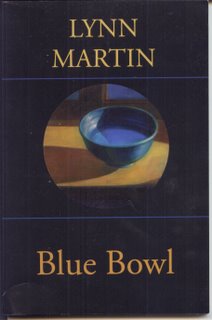 From Wauna--Lynn Martin

Parker Room, Higher Education Center,
Free and open to the public
Featuring YVCC Students and Staff
From Yakima—May 15th: Editors, Weathered Pages Anthology Jim Bodeen, Terry Martin, and Rob Prout.
A six-foot cedar post, the word POETRY carved on both the east and west sides, planted in a garden on a street corner in Yakima, pushpins stuck in the wood. For ten years, hundreds of people have pinned thousands of poems to the Poetry Pole at Blue Begonia Press. After time in the weather, the pages have been taken down and saved—until now. Poems collected here represent a decade of testimony pinned and flying from a cedar post planted in a garden. They may trigger what you're looking for in your own life.
There is room on the Poetry Pole for everybody
Weathered Pages is anthology of work that was brought to individuals through a truly unique and extraordinary means—the pole. “A six-foot cedar post, the word POETRY carved on both the east and west sides, planted in a garden on a street corner in
Weathered Pages has a wide variety of themes and big ideas. Many poems seem to show that love and friendship are an important part of life, for example "Agnes & Pat," "Merry Christmas," and "This Place." Other poems showed a sense of anger and betrayal, for example "The Democratic Way," "Chicken Fricassee," and "Please Post." The ideas these poets expressed came from a large variety like religion, death, expressing your self and feelings to the simple pleasures in life. Some examples would be "A Prayer for Your Cat Scan," "Brothers and Sisters," and "Night Shift." Some poems like "In the Third Drawer of My Dresser" or "Women Gather" aren't as deep into feelings like some of the others mentioned. This collection of poems from all sort of poets gives you a little taste of all types of writing to enjoy.
Biographies:
Jim Bodeen
Jim Bodeen is a literature and writing teacher of Latino students at Davis High School in Yakima, Washington, the publisher and editor of Blue Begonia Press, and the author of several books of poetry including Whole Houses Shaking, Impulses to Love (poems set in North Dakota, Chile and Vietnam), and most recently, This House: A Poem in Seven Books. His plan with This House was to write a single poem about a single morning spent in his garden, listening to "In This House, On This Morning" by the Wynton Marsalis Septet. The poem, an epic narrative, is based on dreams, interactions with his wife, his children, his students, his friends–- but it evolved into a book that took ten months to write.
Jim, who writes in both English and Spanish, edited the book, With My Hands Full, a bilingual anthology of transformational poems by thirty-five young Latino writers. These pieces are witness to loss, migration and arrival. They explore border crossings that are geographical, political and personal. Jim calls these writers abrecaminos–-those who make a way where there is no way.
Jim received a BA in Education and a BA in History, plus a Masters in English from
Bodeen says of his work, "Being called to poetry is being called to listen. It is listening to the deepest sounds. The principles are basic–-extreme sobriety, practicality and courage."
Jim Bodeen and his wife Karen, his book designer and typesetter, have devoted their lives to poetry and poets.
Terry Martin
ELLENSBURG,
For those reasons along with her "extraordinary dedication to teaching, commitment to students and innovative teaching methods," Martin has been named the 2003 Washington state Professor of the Year by the Carnegie Foundation for the Advancement of Teaching and the Council for Advancement and Support of Education (CASE).
She was recognized today (Thursday, Nov. 13) during an awards luncheon at the National Press Club in
In nominating her for the Professor of the Year award, Central President Jerilyn S. McIntyre, who called Martin the "consummate teacher-scholar-mentor," noted, "She has been a leader in moving our institution from one in which lecture is the primary pedagogical technique to one in which students, working cooperatively and in authentic settings, discover their own knowledge and understanding of important topics."
CWU English faculty colleague Paulus Pimomo echoes those sentiments, labeling Martin, "the teacher's teacher."
"Like many of us in the profession, Dr. Martin is familiar with and works hard to meet the demands of the fast evolving curricula and student body," Pimomo pointed out. "But unlike most of us, she has gone on to become a leader in meeting those demands."
Current and former students also are quick to credit Martin as an exemplary teacher and mentor.
"Dr. Martin has an innate ability to motivate students," Jessica Carter, a 1995 CWU graduate, says. "She causes students to dig deeper, think at higher levels, reach into depths of creativity they didn't know existed, and produce work at a quality they didn't know they were capable of. I have heard students say more than once, 'I want to be Dr. Martin,' and there is no hint of jest in that statement."
Martin says she enjoys working at Central because "teaching is the very heart of its mission. CWU offers me the opportunity to teach an interesting mix of general education, major and graduate classes. I enjoy the challenges inherent in attempting to address the diverse interests, needs and abilities of a wide range of students."
Patsy Callaghan, CWU English department chair, says: "I am not aware of another professor whose student evaluation results can compare with Dr. Martin's, yet her standards and expectations are some of the most challenging in the department, contradicting a general assumption that asking students to work hard will often elicit critical comments and negative responses."
About eight years ago, Martin, a native of
Now, she says her creative writing has become a vital part of her teaching.
"I'm a learner; I try things that scare me," Martin points out. "Taking these risks helps me remember there's dignity in being a beginner."
That risk-taking spirit has also helped make her the very best
Rob Prout
Rob Prout teaches high school photography courses at
Prout loves the collaborative process and what it contributes to original work.